
K Bhagyaraj unfiltered: From rickshaw puller to top film filmmaker, a rare 2009 interview
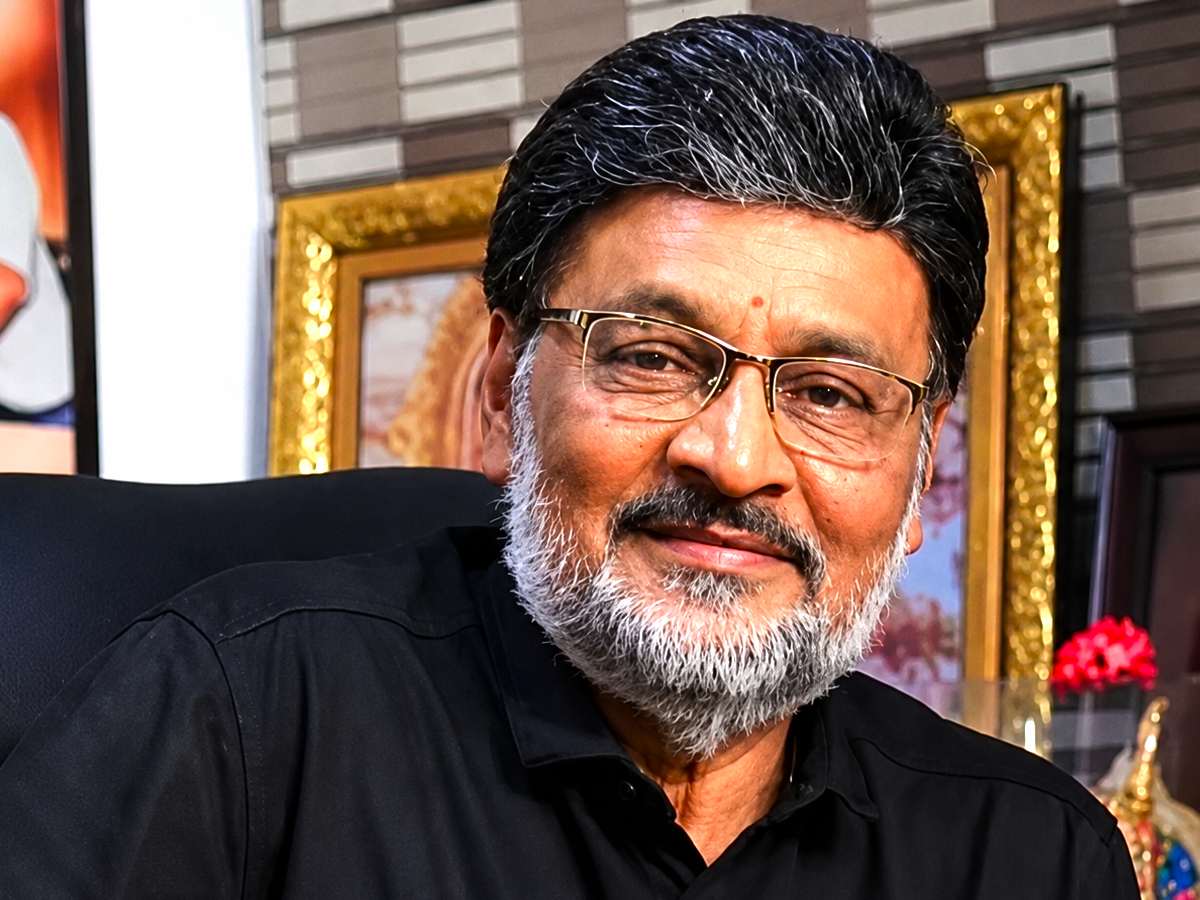
Veteran director-actor K. Bhagyaraj is no more. This interview was conducted by Sri Atluri over the phone in 2009. We are reproducing it from our archives, with minor edits, for the benefit of our newer readers.
“Moodu Mullu”, “Radha Kalyanam”, “Satyabhama”, “Abbaayi Gaaru” and “Adirindi Alludu!” were all remakes of K. Bhagyaraj’s films. Several of his movies were also dubbed into Telugu, and some enjoyed remarkable theatrical runs of over 50 days in multiple centres, with a few even crossing the 100-day mark. Films such as “Chinna Illu” and “Darling, Darling, Darling!” were particularly successful among Telugu audiences.
This multi-talented writer, actor and director was never easy to get hold of. Based in Chennai, Bhagyaraj was deeply occupied at the time. It was election season, and he was actively involved in campaigning for the DMK. Simultaneously, he was directing a film starring his son Shanthanu. With the help of producer-director E.V.V. Satyanarayana garu, I was finally able to get in touch with him. After several attempts, we managed to schedule a telephonic interview late on a Sunday night.
Presented below are excerpts from that exclusive conversation for TeluguCinema.com readers.
Sri: Firstly, do you know Telugu?
Bhagyaraj: (Laughs) My ancestors are from the Andhra Pradesh region, but I was born and brought up in Coimbatore. So, I grew up speaking Telugu at home, though with a distinct Tamil flavour because of my upbringing in Coimbatore and Chennai. Even so, I think my Telugu is reasonably good.
Sri: So, how did the long journey from Coimbatore to Chennai begin?
Bhagyaraj: I was fascinated by films from childhood and actively participated in school plays. I still remember an incident from my sixth standard. A teacher asked each student what they wanted to become in life. Most of my classmates spoke about becoming IAS officers, police officers and other professionals. I was the only one who said I wanted to become a hero like M.G.R. or N.T.R., whom I idolised.
The whole class laughed, but my teacher encouraged me. He said there was nothing wrong with being honest about one’s dreams. That encouragement stayed with me and strengthened my determination.
My passion for cinema only grew stronger with time. Even in school, I would often improvise film dialogues and add my own touches to performances. An incident during my eighth standard proved to be a turning point.
We were rehearsing a play after school hours, while another group was practising nearby. One of the senior students in that play had a habit of repeatedly touching the badge on his school uniform whenever he became nervous. I noticed it and pointed it out to my teachers.
They couldn’t understand what I meant at first. After several rehearsals, they finally asked me to explain. I pointed out that the student was portraying a female character, and that constantly touching the badge on his shirt would look awkward and unnatural on stage.
The teachers were surprised and eventually agreed with my observation. Looking back, that was perhaps the first time I realised I had an eye for detail. It made me believe that I possessed some of the qualities required of a director. Before long, I had begun directing plays myself.
Sri: How did you enter the film industry? It’s never easy to get an opportunity, especially without a film background.
Bhagyaraj: It certainly wasn’t easy. Before finding my footing in cinema, I did just about every job imaginable. For a while, I drifted through life without any clear direction.
It may sound unbelievable today, but I actually ran away from home and came to Hyderabad. During that period, I worked as a cycle-rickshaw puller, a hotel waiter, a circus clown and several other odd jobs before realising that I needed to settle down and pursue something meaningful.
Eventually, I realised that my passion for cinema had never faded. It was still burning within me. That brought me to Chennai, where I decided to seriously try my luck in films.
I neither possessed the physique nor the conventional looks associated with a leading man, so I focused on what I believed was my strength: storytelling. I was always confident in my ability to narrate stories.
I used to visit producer Thooyavan’s house almost every day until he finally agreed to take me on as an assistant. He placed me under Ramakrishnan sir, with whom I worked on “Ezhai Panakkaaran” alongside Balaguru. Ramakrishnan sir later introduced me to Bharathiraja sir, who was then making his debut film “Padunaaru Vayadinile” (the Tamil original of “Padaharella Vayasu”). That was how my journey in cinema truly began.
Sri: By the way, what was your first remuneration?
Bhagyaraj: I didn’t receive anything for “Ezhai Panakkaaran”, but for “Padunaaru Vayadinile”, I received Rs. 150 as my first salary from S.A. Rajakanavu. It may sound like a small amount today, but at that time it felt like a fortune.
I repaid the Rs. 100 I had borrowed from my roommates and even settled some of their outstanding dues. A month-long shooting schedule was supposed to begin the very next day, and we were scheduled to leave for Mysore. Since food and accommodation were being provided by the production, I didn’t think I needed much money.
After reaching Mysore, I spent Rs. 18 on a pair of chappals. Soon after checking into the hotel, we were informed that the schedule had been postponed and that we would have to vacate the hotel and return to Madras on our own.
Imagine my situation. I landed back in Madras with just two rupees in my pocket. I couldn’t even go back to the production office and ask for more money because I had only received my salary the previous day. The next schedule didn’t begin for another month, and I had to endure considerable hardship during that period.
Sri: Tell me about “16 Vayathinile”.
Bhagyaraj: As you know, “16 Vayathinile” was Bharathiraja sir’s first film. I joined the project as his assistant after Ramanathan garu recommended me, saying that I had good handwriting.
One of my responsibilities was coaching Rajinikanth. At the time, he was not fluent in Tamil and could not even read the language. I would read out the dialogues to him and help him with voice modulation. He would listen carefully and repeat the lines over and over until he got them right. He was incredibly hardworking.
You may remember that the film begins with a flashback. That was actually my suggestion. Bharathiraja sir originally wanted a linear narrative. After the shoot was completed, we screened the film for distributors at least twenty times, alternating between the linear version and the flashback version. After all those screenings and discussions, the producer eventually decided to release the film with the flashback structure.
Sri: When did you get promoted to Associate Director?
Bhagyaraj: I became an Associate Director with “Kizhakke Pogum Rail” (1978), which was released in Telugu as “Toorpu Velle Railu”. I also served as dialogue coach for Sudhakar, who was making his acting debut with the film.
Since Sudhakar was a Telugu-speaking actor and I knew both Telugu and Tamil, I helped him learn the language and practise his dialogues. Bharathiraja sir gave him twenty days to master the entire script before shooting began. He jokingly warned Sudhakar that if he failed, he would replace him with me because I was performing the role better during rehearsals! (Laughs)
I also appeared in a small role in the film.
Another interesting memory concerns Radhika. Bharathiraja sir wasn’t entirely convinced about what he called her “baby voice”, and we experimented with nearly twenty different dubbing voices for her character. Personally, I liked her original voice, and eventually we ended up retaining it.
A little-known trivia is that Radhika’s make-up test was conducted using costumes worn by Sridevi in “Padunaaru Vayadinile”. Radhika had only recently returned from London and did not have traditional outfits such as half-sarees, so those costumes came in handy.
Sri: You worked on two village-based films and then shifted gears to a thriller with “Sigappu Rojaakkal” (1978), released in Telugu as “Erra Gulaabeelu”. Was there any specific reason for the change?
Bhagyaraj: Bharathiraja sir wanted to explore a different genre because he didn’t want to be typecast as a director who only made village-based films. During his struggling days, when he was trying to become a director, he had developed several stories across different genres.
His first choice for the lead role in “Sigappu Rojaakkal” was Sivakumar (father of present-day actor Suriya), though most of us were not convinced about the casting. Bharathiraja sir was firm in his decision and approached him. Sivakumar listened to the story, liked it, but felt the role wouldn’t suit his image and politely declined.
Kamal Haasan, who was always open to experimentation, readily agreed to take up the role. Unlike Bharathiraja sir’s first two films, this one didn’t offer much scope for music, so we limited it to just three songs. (The Telugu version had only two.)
Interestingly, Bharathiraja sir initially wanted me to play the role that eventually went to Goundamani, while Goundamani was cast as the waiter. Somehow, we managed to convince him to swap the roles, and I ended up playing the waiter. The film went on to become a huge success.
Sri: How did you make the transition from a supporting actor to a lead actor in “Pudhiya Varpugal” (1979)? (The film was later remade in Telugu as “Kottha Jeevithaalu”, marking Suhasini’s debut, but it failed at the box office.)
Bhagyaraj: Actually, I wasn’t the first choice for that role. In fact, I had already acted as a lead in two other films before “Pudhiya Varpugal”.
After completing “Sigappu Rojaakkal”, I asked Bharathiraja sir for permission to pursue opportunities as a director and began searching for producers. Around that time, Balaguru got his first directorial opportunity and offered me a role in his film, but I wasn’t particularly interested because my focus was on directing.
Meanwhile, I managed to find a producer willing to launch a film with Sudhakar as the hero. Since I already knew Sudhakar from his Tamil debut, he readily agreed. Coincidentally, Balaguru’s producer was Raj Kanavu, who had earlier produced “Padunaaru Vayadinile” and “Kizhakke Pogum Rail”.
There had been some differences between Raj Kanavu and Bharathiraja-Ilaiyaraaja, so he chose Balaguru as director and Shankar-Ganesh as music directors for his new film. The project was titled “Kanni Paruvathile”, starring Rajesh and Vadivukkarasi, and I was offered an important role.
(Laughs) Raj Kanavu actually called Sudhakar and pressured him to postpone the dates he had allotted to my film so that I could first act in his production. Sudhakar obliged, and I ended up doing the film.
“Kanni Paruvathile” became a major success.
After that, I resumed work on my directorial debut. Around the same time, Bharathiraja sir, who was planning to launch his own production banner, called me to help him with the climax portions of a new project. During the story discussions, I felt that substantial changes were required from the beginning of the second half and shared my thoughts with him.
He asked me to make the changes, prepare the scene order and complete the dialogue version as well. We auditioned several newcomers for the lead role. One day, Bharathiraja sir casually asked me to pose for a few photographs wearing spectacles. I did as instructed.
Soon afterwards, he announced that I would be playing the lead role. Once again, it was Bharathiraja sir who changed the course of my career.
At the same time, I launched my own film, “Suvar Illaada Chitirangal” (1979), starring Sudhakar, Sumathi and myself. Interestingly, I wasn’t originally supposed to play that role either. The actor we had cast disappeared after two days of shooting because he received an offer to act as a hero elsewhere. With no alternative available, I stepped into the role myself.
That’s how my acting career continued.
Sri: I believe you ventured into production after that?
Bhagyaraj: Yes. After that, I directed and produced “Oru Kai Osai” (released in Telugu as “Pranaya Geetham”). The film performed moderately.
I later made “Indru Poi Naalai Vaa”, which was remade in Telugu as “Kokkaroko”. However, it was “Mouna Geethangal” (1981) that truly established my popularity among Telugu audiences. The film was remade as “Satyabhama”, starring Chandramohan and Jayasudha under the direction of K. Raghavendra Rao. It also became a major Hindi success as “Ek Hi Bhool”, starring Jeetendra and Rekha, directed by Tatineni Rama Rao.
From that point onwards, almost all my successful Tamil films found their way into Telugu.
“Andha 7 Naatkal” became “Radha Kalyanam” (directed by Bapu), “Thooral Ninnu Pochu” became “Pelli Choopulu”, and “Mundhanai Mudichu” was remade as “Moodu Mullu” by Jandhyala. It was later dubbed into Telugu as “Vaddante Pelli”.
Several of my films as an actor, including “Darling, Darling, Darling!”, “Chinna Veedu” (“Chinna Illu”) and “Chinna Raja”, were dubbed into Telugu and performed almost like straight Telugu films. “Chinna Raja” was later remade as “Abbaayi Gaaru” with Venkatesh and Meena under the direction of E.V.V. Satyanarayana.
Some of these films also enjoyed successful Hindi remakes. “Enga Chinna Raja” became “Beta”, starring Anil Kapoor and Madhuri Dixit, while “Mundhanai Mudichu” was remade as “Masterji”, starring Rajesh Khanna and Sridevi.
Sri: You are one of the few filmmakers who succeeded simultaneously as a director, hero and producer.
Bhagyaraj: There were pioneers before me, such as B.R. Panthulu. But yes, I suppose my journey was unusual because I became successful despite not fitting the conventional image of a hero.
I think that old belief—that heroes must necessarily be handsome in a traditional sense—has gradually been broken. That’s why audiences were able to accept talented performers like Parthiban and Pandiarajan as leading men.
Sri: Speaking of Parthiban, Pandiarajan and others, how do you view the success of your protégés?
Bhagyaraj: I have always believed that an assistant should be ready to direct independently after working on three films. If someone still hasn’t learned the craft by then, something is wrong.
I encourage my assistants to move on and direct their own films after assisting me on three projects. I’m delighted that many of them went on to enjoy considerable success.
Sri: Tell us about “Khaidi Veta” (“Oru Kaidhiyin Diary” in Tamil), which starred Kamal Haasan in a dual role. You wrote the story and dialogues for the original, but directed the Hindi version, “Aakhree Raasta”, starring Amitabh Bachchan.
Bhagyaraj: Bharathiraja sir had gone through a couple of setbacks at the time and was determined to deliver a successful film. He asked me to write the story and dialogues, and I gladly agreed.
When the Hindi remake was being planned, producer Purnachandra Rao garu strongly insisted that I direct it as well, since I had written the original. The prospect of directing the legendary Amitabh Bachchan was naturally very exciting, so I accepted.
Fortunately, I knew the script inside out, which made the language barrier far less challenging than one might imagine.
Sri: Why do you think some of your films—and even some of your guru Bharathiraja’s films—failed in Hindi? Films such as “Solvaa Saavan”, “Saveri Vaali Gaadi” and “Mr. Bechara”, for example.
Bhagyaraj: Nativity and execution made all the difference. Certain emotions and situations that work beautifully in the South do not always translate effectively to North Indian audiences.
The cultural gap between the two regions sometimes worked against those films, despite the strength of the original material.
Sri: I believe you made a straight Telugu film for Sarathi Studios titled “Ammaayiluu… Preminchandi!” after the tremendous success of “Pelli Choopulu” and “Radha Kalyanam”, both remakes of your films under their banner?
Bhagyaraj: Actually, even that film was a remake. We reshot a few portions to suit Telugu nativity, but most of the film was dubbed from the original version. Unlike the earlier remakes, which became major successes, this one performed only moderately.
Sri: Come to think of it, why did you never direct the Telugu remakes of your own films? After all, movies like “Chinna Raja”, “Chinna Illu”, and “Darling, Darling, Darling!” were quite popular among Telugu audiences.
Bhagyaraj: I always felt that directing my own remake would mean repeating the same work all over again. Instead of spending that time revisiting an old film, I preferred creating a new one. My first wife, Praveena, often urged me to direct a straight Telugu film. Unfortunately, she never lived to see me do that.
Sri: There were many rumors surrounding her untimely death. I also heard yours was a love marriage. Could you tell us a little more about it?
Bhagyaraj: I first met Praveena at producer Thooyavan sir’s office. She was a Telugu girl looking for someone to teach her Tamil, and I began coaching her. By then, she was already acting in both Telugu and Tamil films. Telugu audiences may remember her from films like “Suryachandrulu”, which starred Chandramohan, Praveena and Madhavi, and featured memorable songs such as “EdO EdO Cheppaalani, Manasantaa Vippaalani…”
We later worked together in a film titled “Bhama Sathyabhama”. During that period, we fell in love and eventually got married.
She passed away due to illness following the birth of our son, Shanthan. My world came crashing down. I was never quite the same person after that.
(Even today, a large photograph of Praveena occupies a prominent place in his office.)
Sri: There were also rumors that you had fallen in love with your co-star Poornima, that you were contemplating divorce, and that this somehow contributed to Praveena’s death.
Bhagyaraj: That’s absolute nonsense. Poornima and I worked together in “Darling, Darling, Darling!”, but we were nothing more than co-stars at the time. She is a wonderful person, but there was no romantic involvement between us then.
It was only after Praveena’s sudden passing, when I found myself alone with a young child to care for, that I happened to meet Poornima again and began considering marriage.
Sri: How did that eventually happen? Did she agree immediately? Could you share that story with us?
Bhagyaraj: After Praveena’s death, I travelled frequently, trying to cope with the shock and grief. During one such visit to Mumbai, I met my PRO, who also handled Poornima’s publicity.
When I asked him what brought him to Mumbai, he told me he had come to see Poornima off, as she was leaving for Paris the following day to shoot for a Malayalam film.
It happened to be Diwali. Knowing that I was in Mumbai, Poornima invited me to her home, where her parents were also present. When I met her that day, I felt I would be fortunate if she agreed to marry me. Before leaving, I asked her, somewhat nervously, to call me once she reached Paris, if possible.
She simply looked at me, slightly puzzled, and said nothing.
I returned to Madras and heard nothing from her for a week. Frankly, I felt embarrassed about having spoken so directly.
Then one day, our office boy told me that a girl had been calling every day from “Parry’s Corner” and wanted to leave her phone number. I wasn’t interested and told him not to bother.
A little later, it suddenly struck me.
I exclaimed, “Adaa paavi! Not Parry’s Corner… Paris!”
I immediately contacted my PRO, got her number, and called her hotel in Paris. Since she was away shooting, I left a message at the reception.
When the unit returned from the shoot, the hotel staff passed on my message to her right in front of everyone. By the time she landed back in Madras, the entire film industry already seemed to know about it!
The rest, as they say, is history.
Sri: Which artistes did you idolize during your formative years?
Bhagyaraj: Without a doubt, the legendary M.G.R., N.T.R., Sivaji Ganesan and A.N.R. were my idols.
In fact, it was N.T.R. garu who advised me to remarry after Praveena’s passing. I met him at a gathering where the Chief Ministers of all the southern states were present on the dais. His words stayed with me.
Whenever I visit Hyderabad, I make it a point to meet A.N.R. garu. I deeply admire both M.G.R. and Sivaji Ganesan. Given an opportunity, I would love to portray roles like Sivaji sir’s character in “Mudal Mariyadai” or A.N.R. garu’s role in “Seetharamaiah Gari Manavaralu”.
Sri: What are your thoughts on the current trends in cinema?
Bhagyaraj: Things are slowly changing for the better. A few years ago, the image of stars and directors played a dominant role in determining a film’s prospects. Today, films like “Subramaniapuram” (dubbed into Telugu as “Ananthapuram 1980”) and “Gamyam” have shown that audiences are willing to embrace strong content.
I hope more films follow that path.
One concern I still have is that many established heroes prefer to work only with established directors or filmmakers who already have proven box-office success. They are often reluctant to take chances on newcomers. Fresh talent needs opportunities.
In fact, I advise my son to work with a new director at least once in every three films. That is the only way new voices can emerge and enrich the industry.
Sri: Your films were often associated with glamorous heroines and double entendres. Yet, your directorial venture “Paarijaatham”, which introduced your daughter Sharanya Bhagyaraj as the lead, had none of those elements. Why?
Bhagyaraj: That’s because the film belonged to a completely different genre. To be honest, I was quite concerned about choosing the right subject for my daughter’s launch. Fortunately, I found a story that suited her perfectly, and it worked well.
As for the criticism about double meanings, I don’t agree with it. I have never promoted vulgarity in my films. Sex is a part of life, and I merely portrayed it aesthetically and within the boundaries of family entertainment.
I have always believed that a film succeeds when it touches at least one emotional chord in the life of an ordinary person. You don’t necessarily need gigantic sets or extravagant budgets to achieve that.
People come to the movies to escape their problems for a few hours, but at the same time, cinema must also connect with their lives and emotions.
Another aspect that has always been important to me is writing strong female characters. Whether it is “Chinna Raja”, “Chinna Illu”, “Moodu Mullu” or any of my other films, the women are never mere accessories to the story. They are integral to the narrative and often drive it forward.
Of course, some glamour is also necessary. It is one of the ingredients of commercial cinema. The key is to present it tastefully and within the demands of the story.
Note: This interview was originally published in 2009 and is being republished from the TeluguCinema.com archives with minor edits for clarity.
Interview by: Sri Atluri
Edited by: Jalapathy Gudelli