From Sankarabharanam to Geetanjali: Veturi on writing without restrictions
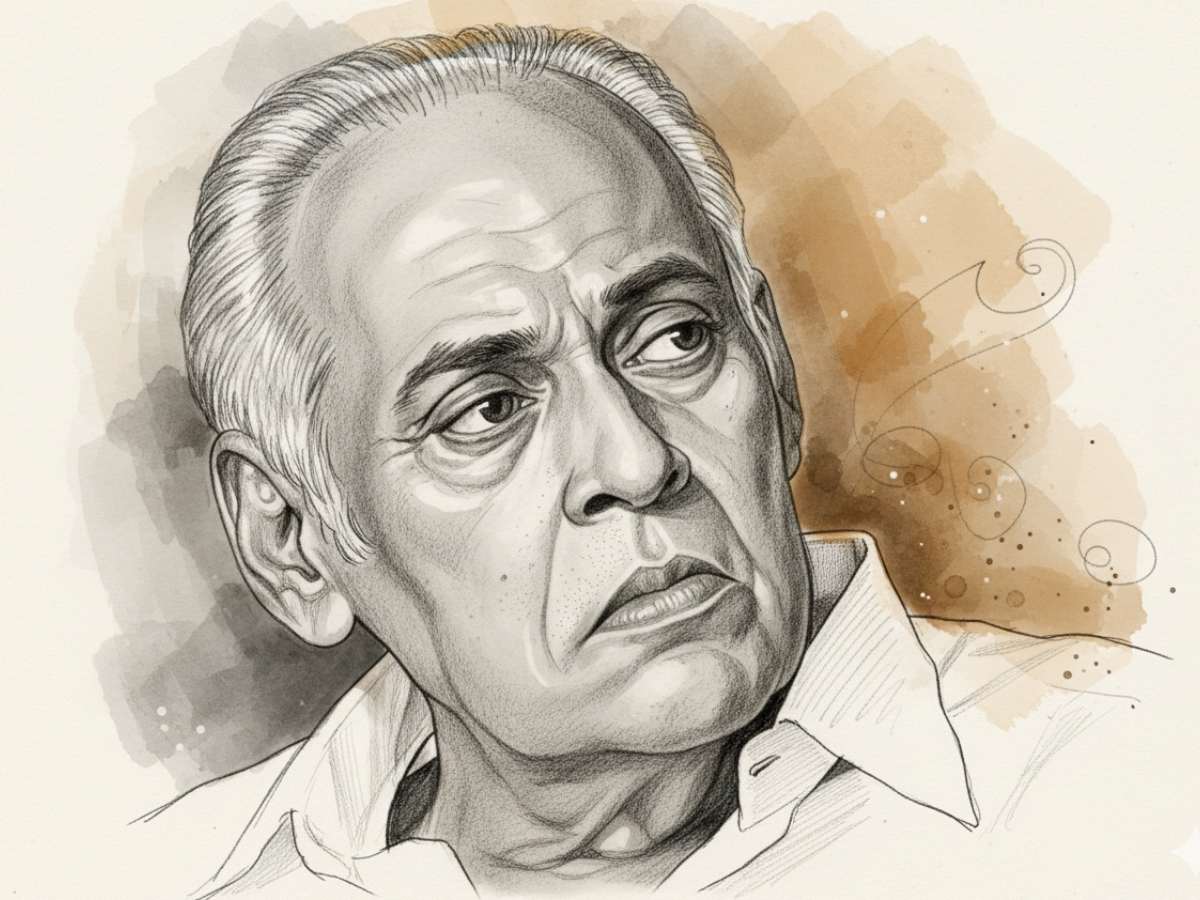
Veturi Sundararama Murthy remains one of the most influential lyricists in the history of Telugu cinema. He was an artiste who transformed the very grammar of film lyrics after his arrival. A scholar-poet with cinematic instinct, Veturi effortlessly bridged classical literature and popular culture, leaving behind a body of work that continues to inspire generations.
From timeless classics like “Sankarabharanam” and “Sagara Sangamam” to the National Award-winning “Matrudevo Bhava,” Veturi proved his mastery over both refined poetry and mainstream cinema. While celebrated for his chaste, philosophical, and devotional compositions, he also courted criticism for penning double-meaning lyrics in commercial entertainers like “Adavi Ramudu.” Yet, that duality defined his genius: few could traverse such contrasting worlds with similar ease.
A lyricist of rare range and speed
Veturi possessed an extraordinary ability to write profound philosophical verses, soulful devotional songs, and mass-appeal commercial numbers, often within minutes. Over the course of his illustrious career, he wrote thousands of songs and collaborated with almost every major director and music composer of his time.
However, Veturi often acknowledged that true creative excellence comes from freedom. Despite working with many legends, he openly stated that only a handful of directors allowed him complete liberty to express himself—and that his finest work emerged from those collaborations.
The directors who gave Veturi complete creative freedom
When academician C. Mrinalini once asked Veturi about the filmmakers for whom he wrote with absolute freedom and without restraint, the legendary lyricist gave a detailed and heartfelt response.
“In this regard, I have to state three directors as the primary:
1) K. Viswanath Garu
2) Mani Ratnam Garu
3) Jandhyala Garu”
K. Viswanath: The Guru who shaped the lyricist
Veturi regarded K. Viswanath not merely as a director but as a guru. “He guided me on how to write lyrics for films. He not only introduced me to cinema as a lyricist but also trained me to become a professional one.”
Under Viswanath’s mentorship, Veturi’s lyrical voice found discipline, depth, and purpose, resulting in some of Telugu cinema’s most revered songs.
Jandhyala: The brother who brought out his best
Describing Jandhyala as a younger brother, Veturi fondly recalled how the filmmaker enjoyed his writing and constantly encouraged him to do better.
“Some of my best work appeared in his directorial ventures.” Jandhyala’s sensitivity and trust allowed Veturi’s wit, emotion, and poetic brilliance to flourish effortlessly.
Mani Ratnam gave freedom to write poetry
For Mani Ratnam, Veturi penned the iconic Geetanjali, composed by Ilaiyaraaja. “Even though Ilaiyaraaja gave the tunes, all the songs turned out poetic.”
Geetanjali remains the only straight Telugu film Veturi wrote for Mani Ratnam. Yet, he went on to write lyrics for nearly ten of Mani Ratnam’s dubbed films, a process that never felt restrictive.
“I never felt like I was writing for a dubbed film because Mani Ratnam gave me complete freedom, without worrying about the original Tamil lyrics.”
Other notable collaborations
Veturi also acknowledged K. Raghavendra Rao and Singeetam Srinivasa Rao as directors who gave him the space to write freely. In particular, Singeetam offered him opportunities to explore meaningful, poetic expressions that stood apart from formulaic songwriting.
Reflecting on his journey, Veturi summed it up with quiet pride: “I feel proud and satisfied that I could write songs representing surrealism and romanticism in film music, thanks to these directors.”