
Akhanda 2 Review: A sequel that fumbles
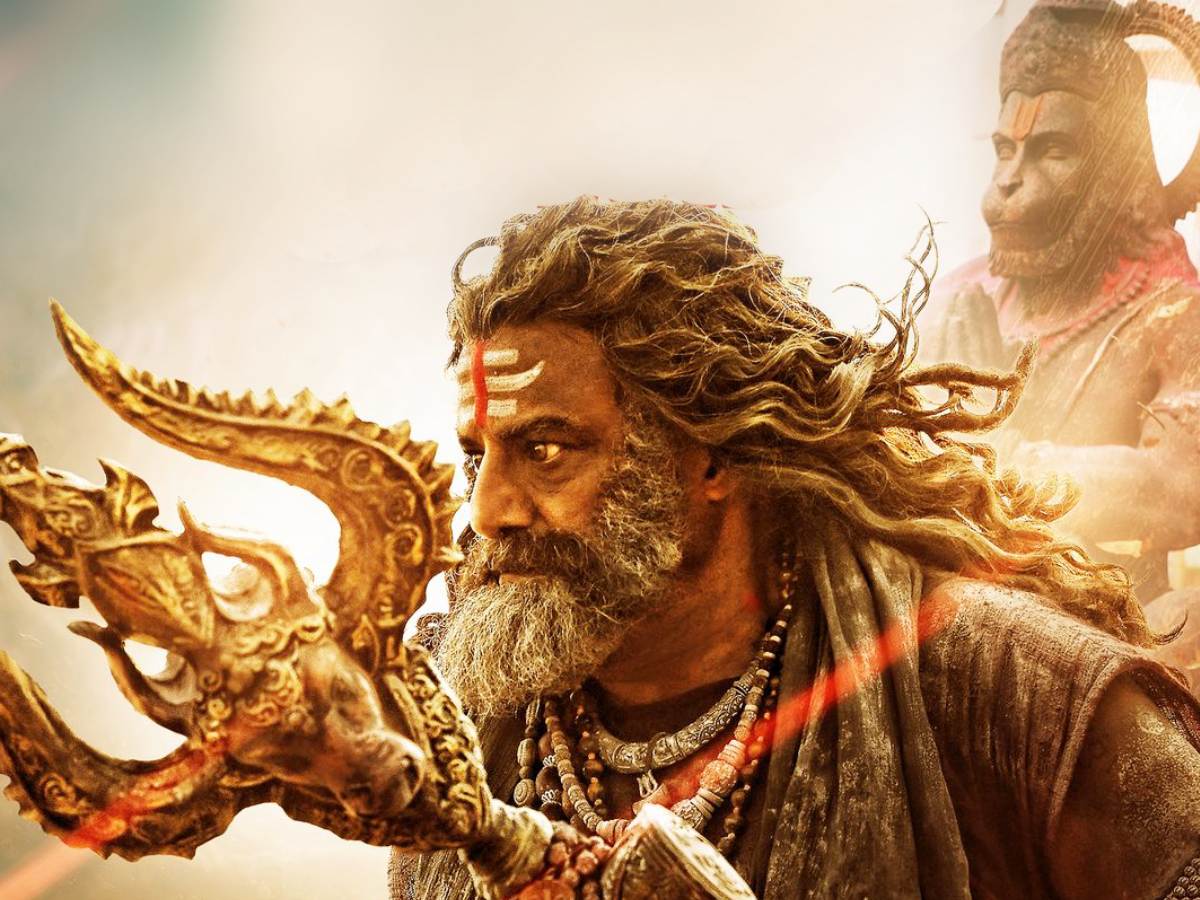
What’s ‘Akhanda 2’ all about?
Akhanda (Nandamuri Balakrishna) retreats into the Himalayas to undertake the Ashta Siddhi yoga, a process that demands years of profound meditation. On the other hand, Bala Muralikrishna (also played by Nandamuri Balakrishna) becomes an MLA. His wife has passed away, and his daughter Janani (Harshaali Malhotra) has grown into a bright young scientist at DRDO. Her superior, army officer Archana Goswamy (Samyuktha), entrusts her with the development of a bio-protection shield proposed by the prodigious researcher.
During this time, a rogue Chinese general devises a biowarfare plot targeting India. He contaminates the Ganga with a deadly virus during the Maha Kumbha Mela, where lakhs of devotees are performing the holy ritual bath. His belief is that India will falter only when its people lose faith in their dharma and their gods.
Shocked by the catastrophe, the Prime Minister authorizes an accelerated effort to create a cure. Janani and her team develop a vaccine in record time, but as she travels to deliver it to the production facility, she comes under attack from the general’s forces.
Akhanda had once promised Janani during her childhood that he would come to her aid whenever she needed him. True to his word, he emerges at the crucial moment and shields her from danger. His mission, however, extends beyond her protection. He must also safeguard the nation and uphold Sanatana Dharma.
Analysis
Nandamuri Balakrishna’s “Akhanda 2: Thaandavam” arrives as the sequel to the 2021 hit “Akhanda,” once again directed by Boyapati Sreenu. The first film showcased Balakrishna in a dual role, with the Aghora avatar striking a strong chord with audiences through both the actor’s compelling performance and the film’s devotional dimension. The sequel attempts to extend this formula, although it now intertwines themes of Sanatana Dharma with patriotism.
Indian cinema usually treats Pakistan as the default antagonist in patriotic narratives. Boyapati, however, chooses China as the adversarial nation in this story and places a Chinese general at the centre of conflict. Incorporating real-world references such as the Galwan clash, a virus reminiscent of COVID-19, and India’s vaccine efforts, he blends these elements into a plot fashioned like a thematic “mixie” of borrowed events and fictional escalation.
To bridge the first film and this sequel, Boyapati foregrounds Janani, the child seen in “Akhanda,” who now appears as a DRDO scientist. Her transformation into a crucial researcher works reasonably as connective tissue, yet the idea of a Chinese general waging biowarfare single-handedly, without any involvement from his government, strains credibility. His line, “Let Beijing handle administration, I will handle the wars,” underlines this.
The film opens neatly by revisiting earlier events and establishing the biowar premise, but it falters soon after. The narrative grows sluggish and unconvincing, and only near the intermission does it regain some energy. As expected in a Boyapati film, the interval sequence is thunderous. The arrival of Akhanda, now depicted as an elder version of the Aghora, injects the drama with a momentary sense of revival.
Post-interval, the film devotes considerable focus to Akhanda’s exposition on Sanatana Dharma and its dharmic significance. A subplot involving Aadhi Pinisetty and a politician then unfolds. Aadhi’s portrayal of a tantric and his confrontation with the younger Aghora is intriguing, although his return in a later fight, with his eye and severed tongue inexplicably restored, feels entirely illogical. This is, after all, a Boyapati creation and operates on its own internal rules. The film has galore of illogical sequences.
While the second half contains a handful of engaging dialogues and isolated moments, the climax does not rise to the scale suggested by the film’s ambitions. The prolonged final action sequence particularly feels underwhelming.
Fundamentally, the film suffers from ineffective writing and a tendency to package every moment to suit the current trend of devotional action spectacles. I personally did not like the first part even though it became a massive hit. Yet it at least offered novelty through the Aghora character, a few compelling moments, and Thaman’s electrifying score. The sequel lacks these strengths, largely because the Aghora persona no longer brings any sense of surprise.
Among the mass moments designed to elicit devotional fervour, two sequences stand out conceptually: a shadow fight involving Lord Hanuman and a Shiva Thaandavam episode. Although both are mounted impressively, neither achieves the emotional impact intended.
With mythological and devotional themes currently resonating strongly at the box office, Boyapati draws these elements into his trademark blend of heightened action and mass theatrics. The core problem, however, remains the excess.
In terms of performances, Nandamuri Balakrishna is compelling as the aged Akhanda. His presence in the first half is limited, but he takes charge in the latter portion, delivering forceful dialogue with authority. Samyuktha Menon performs adequately but her role lacks substance. Aadhi Pinisetty achieves the right appearance for a villain, although the characterization fails to convey true menace. Harshaali Malhotra, in her Telugu debut, is quite effective.
Boyapati Sreenu’s collaboration with Balakrishna usually connects well with mass audiences, yet even loyal fans may find the narrative less engaging this time. The action sequences are vigorous, although many rely heavily on the Trishoolam to resolve conflict. The film does contain several impactful dialogues, particularly those centered on Sanatana Dharma.
Thaman’s background score is loud and serviceable in parts, although the songs fall short. The cinematography offers rich visual appeal, but the quality of visual effects is inconsistent and frequently substandard.
Bottom line: “Akhanda 2: Thaandavam” neither captures the spiritual intensity nor evokes the patriotic fervor it aims for. The film lacks the mass appeal of the first installment. Boyapati’s script and direction fall short. Apart from a couple of moments in the second half and Balakrishna’s riveting performance, “Akhanda 2” struggles to make an impact. Is it anywhere close to the first Akhanda? Not at all. It has devotional elements but lacks emotional connect.
Rating: 2.5/5
By Jalapathy Gudelli
Movie: Akhanda 2 Thaandavam
Cast: Nandamuri Balakrishna, Samyuktha, Aadi Pinishetty, Harshaali Malhotra, Poorna, Sharath Lohithaswa, and others
Music: Thaman S
DOP: C Ramprasad, Santoshh D Detakae
Production Designer: AS Prakash
Editor: Tammiraju
Action: Ram-Lakshaman, Ravi Varma
Producers: Raam Achanta, Gopi Achanta
Written and Directed by: Boyapati Sreenu
Release Date: December 12, 2025